




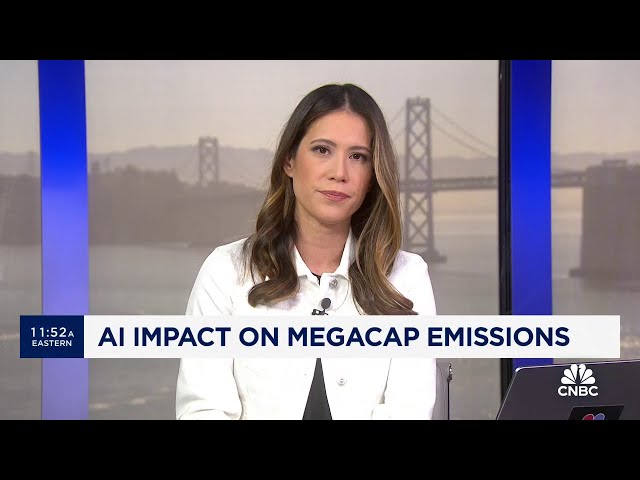
AI Drives Energy Consumption and Environmental Impact
The rapid growth of Artificial Intelligence (AI) applications has transformed industries, but it comes with a significant cost: a skyrocketing carbon footprint. Major AI firms are facing challenges in meeting their emissions goals due to the immense energy demands of data centers powering AI systems.
Summary Table
| Aspect | Details |
|---|---|
| Energy Demand | Generating an AI image consumes as much energy as fully charging a smartphone. |
| Emissions Increase | Google’s emissions rose 50% due to AI-related data center expansions. |
| Growth Forecast | AI-driven data center energy consumption is projected to grow 70% by 2027. |
| Green Energy Initiatives | Companies are investing in nuclear and renewable energy to power data centers. |
Rising Energy Demands of AI Systems
AI applications are highly compute-intensive, leading to a sharp increase in energy consumption. Data centers, the infrastructure powering AI, require vast amounts of electricity to operate, with energy demands increasing alongside the popularity of generative AI tools.
For instance, Google’s emissions have surged 50% due to its data center expansions, while Microsoft’s emissions rose nearly 30% between 2020 and 2023. Amazon reported a 40% increase in carbon emissions between 2019 and 2021.
The Paradox of AI’s Promise
AI promises to optimize energy consumption through enhanced data analysis and operational efficiency. However, the very infrastructure supporting AI growth—data centers—poses significant environmental challenges.
- Generative AI: AI models like DeepMind have optimized energy use in data centers, demonstrating the potential of AI in sustainability efforts.
- Challenges Ahead: Achieving net-zero emissions by 2030 remains a formidable task for many tech companies, as solutions depend on broader clean energy transitions.
Green Energy Investments
To address these challenges, major tech firms are heavily investing in green energy initiatives. Examples include:
- Nuclear Energy: Amazon recently acquired a nuclear-powered data center in Pennsylvania for $650 million.
- Renewable Energy: Google and other companies are integrating renewable energy sources to meet sustainability goals.
Future Outlook
Despite the challenges, AI-driven data centers are here to stay. Morgan Stanley estimates a 70% increase in energy consumption through 2027, largely due to the expansion of AI applications. This growth underscores the urgency of developing scalable, green energy solutions.
Watch the Full Video
For a detailed look at AI’s energy demands and environmental impact, watch the full video:
Conclusion
As AI continues to grow, addressing its environmental impact is critical. By investing in sustainable technologies and optimizing energy use, the tech industry can balance innovation with environmental stewardship.