



The Massive Power Draw of Generative AI: How It’s Overtaxing Our Grid
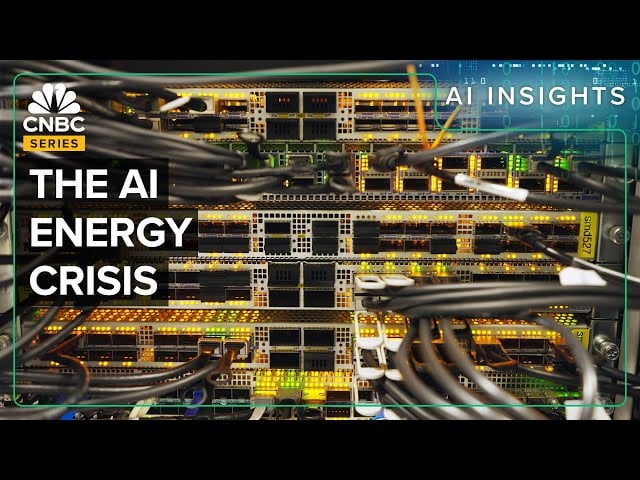
The explosive rise of generative AI technologies, such as OpenAI’s ChatGPT, Google’s Gemini, and Microsoft’s Copilot, has led to an unprecedented demand for data centers and power. While these technologies promise transformative capabilities, their energy consumption raises significant challenges for power grids and the environment.
Summary Table
| Aspect | Details |
|---|---|
| Global Data Centers | Over 8,000 worldwide, with a high concentration in the U.S. |
| Projected Power Consumption | 16% of total U.S. power by 2030, up from 2.5% in 2022. |
| Cooling Water Needs | More water annually by 2027 than four times Denmark’s total usage. |
| Environmental Impact | AI training can generate CO2 equivalent to five gas-powered cars’ lifetimes. |
The Growing Demand for AI-Powered Data Centers
Data centers are the backbone of the internet, streaming everything from social media to advanced AI-powered services. With generative AI driving up computing needs, the demand for data centers has skyrocketed.
- Global Data Centers: Over 8,000 data centers operate worldwide, with a high concentration in the U.S.
- Energy Usage: Data centers could account for 16% of total U.S. power consumption by 2030, up from just 2.5% in 2022.
- Rising Emissions: Companies like Google and Microsoft have seen their emissions surge, partly due to AI workloads.
AI’s Staggering Energy and Resource Needs
One ChatGPT query uses nearly ten times as much energy as a typical Google search. Training large AI models like GPT-3 requires immense power, generating as much CO2 as five gas-powered cars over their lifetimes. Cooling these servers consumes vast amounts of water, with AI projected to withdraw more water annually by 2027 than four times Denmark’s total water usage.
Challenges Facing Power Grids
Aging Infrastructure
The U.S. power grid is struggling to keep up with growing demand:
- Peak Load Stress: Data centers in regions like Northern Virginia have pushed the grid to its limits, forcing power companies to delay new connections.
- Aging Transformers: With an average age of 38 years, transformers are a common cause of power outages.
Load Shedding and Renewable Energy
To address grid strain, companies are exploring load shedding, renewable energy, and on-site power generation:
- Load Shedding: Companies like Vantage voluntarily disconnect from the grid during peak hours.
- Renewable Energy Projects: Many data centers are relocating to areas with abundant solar, wind, or nuclear power.
- On-Site Power: Some data centers generate their own power using natural gas plants or experimental technologies like mini nuclear reactors.
Cooling Solutions for Data Centers
Cooling is a significant driver of AI’s energy and water consumption:
- Air Cooling: Traditional systems rely on air and water to cool servers, but they can be resource-intensive.
- Liquid Cooling: Emerging solutions include direct-to-chip liquid cooling, which promises greater efficiency.
- Innovative Approaches: Companies are experimenting with techniques like submerging servers underwater, though some, like Microsoft, have halted such projects due to feasibility issues.
The Role of Efficient Technologies
Efforts to reduce AI’s energy footprint include:
- Hardware Optimization: Companies like ARM and Nvidia are developing chips that are far more power-efficient.
- On-Device AI: By running AI tasks directly on devices, companies like Apple and Qualcomm can save significant energy.
- Advanced Memory Solutions: Data compression and optimized storage reduce power needs while maintaining performance.
The Future of Generative AI and Power Infrastructure
While generative AI presents immense opportunities, its sustainability depends on innovations in energy efficiency and infrastructure. Industry leaders are actively working on solutions, but scaling AI capabilities without overwhelming our power grid will remain a critical challenge.
Watch the Full Video
For a deeper dive into this topic, watch CNBC’s report: